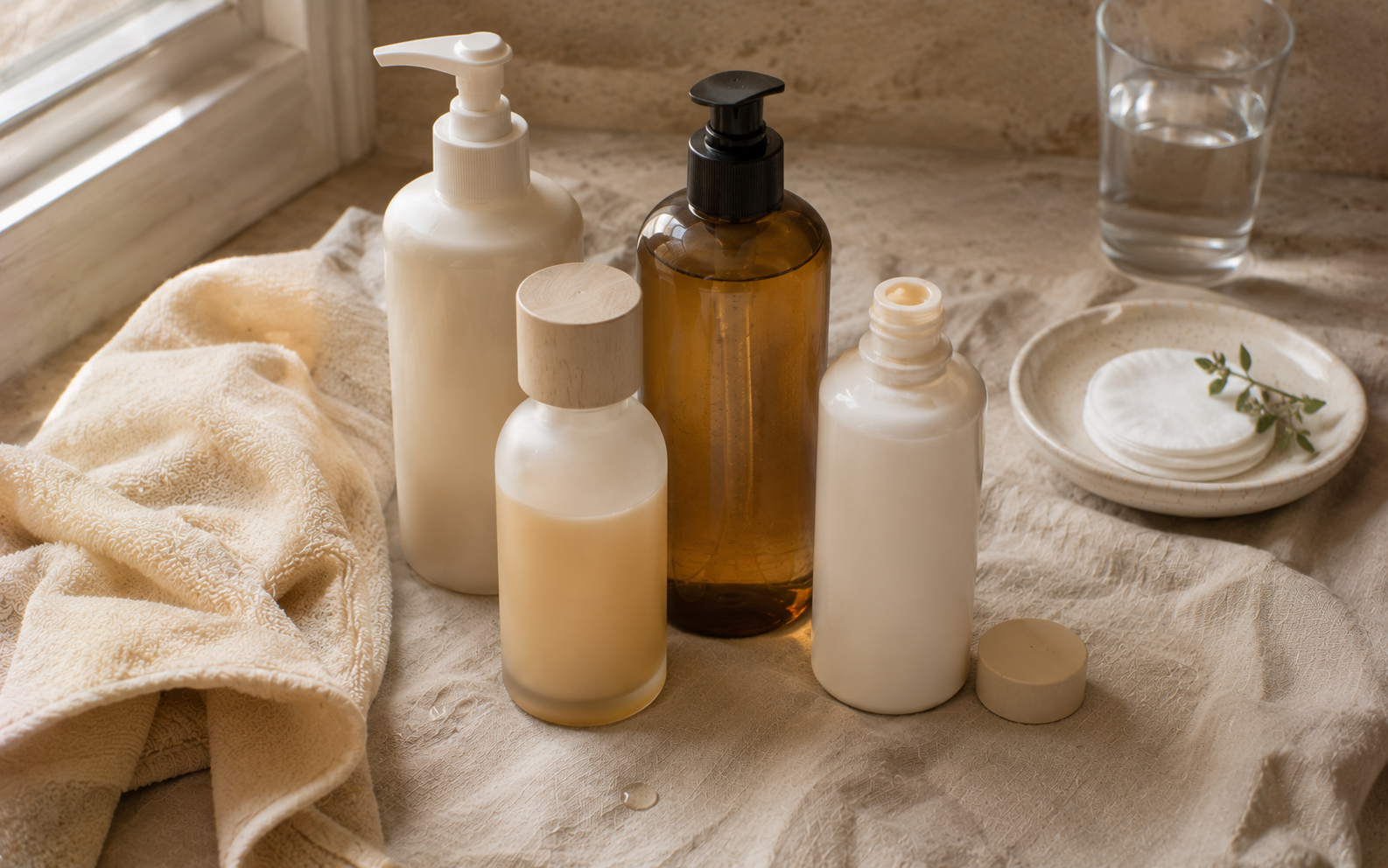
How to compare body lotions
Instead of treating one product as universally "best," compare body lotions according to formulation, intended skin type, ingredients, texture, fragrance, size, price, and the concern you want to address. Product formulas and prices can change, so check the current packaging and ingredient list before purchasing.
What matters in a body lotion
- Skin type and dryness — richer creams may be preferable for very dry skin, while lighter lotions may feel more comfortable for normal or oily skin.
- Moisturizing ingredients — ingredients such as glycerin, hyaluronic acid, ceramides, petrolatum, dimethicone, mineral oil, and shea butter can contribute to moisturization and barrier support.
- Texture — consider whether you prefer a light lotion, rich cream, balm, or oil.
- Fragrance — fragrance can be an important preference, but fragrance-free products may be a better choice for people with sensitive or easily irritated skin.
- Targeted ingredients — products for rough texture, body acne, or other concerns may contain ingredients such as lactic acid, salicylic acid, urea, or retinoids.
- Value — compare the size, frequency of use, ingredients, and price rather than assuming that a more expensive product is automatically better.
What we discount
Some features can influence the experience of using a product without necessarily determining how well it moisturizes skin:
- Packaging aesthetics
- Celebrity or influencer endorsements
- Brand prestige by itself
- Marketing language such as "miracle" or "instant transformation"
- Price as a substitute for evaluating the actual formulation
The practical limitations
- Individual skin can respond differently to the same product.
- Climate and season can influence which texture feels comfortable.
- Fragrance preferences vary considerably.
- Product formulas can change, so always check the current ingredient list.
- Prices and product availability vary by country and retailer.
The most useful way to choose a body lotion is to start with your skin's needs, then compare formulations and textures that fit those needs. A product that fits your routine and budget is often a more practical choice than one selected only because it is expensive or heavily marketed.
Best overall: popular everyday options
These are widely available products that are useful starting points when comparing everyday body moisturizers. They are presented as product-information picks rather than personal hands-on test results.
CeraVe Moisturizing Cream — Best for Rich Everyday Moisturizing
Typical price: ~$15 for 16 oz
Texture: Thick cream
Best for: Dry to normal skin; people who prefer richer moisturizers
Why consider it: CeraVe Moisturizing Cream is formulated with ceramides and hyaluronic acid and is designed for use on the face and body. Its richer cream texture makes it a practical option for people who prefer more substantial moisturization.
Pros:
- Rich cream texture
- Contains ceramides
- Contains hyaluronic acid
- Fragrance-free formulation
- Large-size options are widely available
Cons:
- May feel heavy for people who prefer very lightweight products
- May take longer to feel fully absorbed than a thin lotion
- Texture preference is highly individual
Why it may suit you: A straightforward option if you want a richer, fragrance-free moisturizer and prefer a cream texture over a lightweight lotion.
Aveeno Daily Moisturizing Lotion — Best Lighter Everyday Option
Typical price: ~$10 for 18 oz
Texture: Light lotion
Best for: Normal to slightly dry skin; people who prefer lighter textures
Why consider it: Aveeno Daily Moisturizing Lotion uses colloidal oatmeal and is designed as an everyday moisturizer. Its lighter texture can appeal to people who dislike heavier creams.
Pros:
- Light lotion texture
- Contains colloidal oatmeal
- Widely available
- Practical for everyday use
- Generally affordable
Cons:
- May not feel rich enough for very dry skin
- Fragrance preferences vary
- May not be the best texture for someone seeking a heavy cream
Why it may suit you: A reasonable starting point if you want an everyday lotion with a lighter feel rather than a thick cream.
The practical verdict
For many shoppers, the decision can start with texture and skin needs:
- CeraVe Moisturizing Cream may suit people who prefer richer moisturization and a cream texture.
- Aveeno Daily Moisturizing Lotion may suit people who prefer a lighter everyday lotion.
Neither product needs to be treated as universally superior. Your skin type, climate, fragrance preference, ingredient preferences, and willingness to use the product consistently are more useful factors when making the choice.
Best by skin type
Specific options can make more sense depending on your skin's characteristics and the texture you prefer.
For dry skin
For very dry skin, creams and ointments can be useful because they generally provide more substantial moisturization than lighter lotions. The American Academy of Dermatology recommends looking for ingredients such as glycerin, hyaluronic acid, mineral oil, petrolatum, shea butter, and dimethicone in moisturizers for dry skin. :contentReference[oaicite:0]{index=0}
Options to compare:
Eucerin Advanced Repair Cream (~$12, depending on retailer)
A richer option intended for dry, rough skin. Check the current product label for the exact formula and active ingredients.
CeraVe Moisturizing Cream (~$15)
A fragrance-free cream containing ceramides and hyaluronic acid.
Vanicream Moisturizing Cream (~$15)
A fragrance-free option designed for people who prefer a relatively simple moisturizer.
Aveeno Skin Relief Moisturizing Lotion (~$10)
Contains colloidal oatmeal and is intended for dry skin.
What to consider if you have dry skin
- Consider creams or ointments if ordinary lotions do not feel moisturizing enough.
- Look for fragrance-free options if fragrance irritates your skin.
- Apply moisturizer while skin is still damp after bathing.
- Avoid very hot, prolonged showers if they make dryness worse.
For normal skin
Most normal skin can accommodate a broad range of lotion textures. Choose according to texture, fragrance preference, ingredients, availability, and budget.
Options to compare:
Aveeno Daily Moisturizing Lotion (~$10)
A lightweight everyday option containing colloidal oatmeal.
Lubriderm Daily Moisture (~$8)
A straightforward lightweight body lotion intended for everyday moisturization.
Cetaphil Moisturizing Lotion (~$13)
A lightweight moisturizing option that may appeal to people who prefer a simple lotion texture.
Necessaire The Body Lotion (~$25)
A more premium body lotion positioned around ingredients, texture, and sensory experience.
For oily or combination skin
Even oily skin can become dry. If you dislike heavy products, consider lightweight lotions and avoid choosing texture based solely on how "rich" a product feels.
Options to compare:
Olay Quench Body Lotion (~$8)
A lighter body lotion option for people who prefer a less substantial texture.
Cetaphil DermaControl Oil Removing Lotion (~$15)
A lighter formulation positioned for skin that tends to become oily.
The Ordinary Natural Moisturizing Factors + HA (~$8)
A lightweight moisturizing formulation that can also be used on areas of the body.
Hada Labo Gokujyun Hyaluronic Acid Hydrating Lotion (~$15)
A lightweight Japanese skincare product often used as a hydrating layer.
For sensitive skin
If your skin is sensitive or easily irritated, fragrance-free products can be a useful starting point. If a product causes burning, stinging, or irritation, stop using it and consider speaking with a dermatologist. The AAD specifically recommends gentle, fragrance-free moisturizers for dry, sensitive skin. :contentReference[oaicite:1]{index=1}
Options to compare:
La Roche-Posay Lipikar AP+M Triple Repair Moisturizer (~$25)
A richer moisturizer formulated for dry, sensitive skin.
Vanicream Moisturizing Cream (~$15)
A fragrance-free option commonly chosen by people looking for a relatively simple formula.
Cetaphil Restoraderm Eczema Calming Body Moisturizer (~$15)
Designed for dry, eczema-prone skin.
CeraVe Moisturizing Cream (~$15)
A fragrance-free cream containing ceramides and hyaluronic acid.
What to consider for sensitive skin
- Fragrance-free products may be preferable.
- Introduce new products gradually if your skin reacts easily.
- Do not assume that "natural" automatically means gentle.
- Check the current ingredient list before purchasing.
- Persistent eczema, rashes, or significant irritation should be discussed with a dermatologist.
For mature skin
As skin changes with age, some people prefer richer moisturizers or products containing ingredients marketed for texture and appearance. Expectations should remain realistic, especially for products marketed around firming or anti-aging effects.
Options to compare:
RoC Retinol Correxion Body Care (~$28)
A body product containing retinol and positioned around texture and signs of aging. Retinoid products can irritate skin, so follow the manufacturer's directions.
Necessaire The Body Cream (~$25)
A richer premium body cream with a focus on ingredients and texture.
StriVectin Crepe Control Tightening Body Cream (~$80)
A premium product marketed toward the appearance of crepey skin.
Augustinus Bader The Body Cream (~$130)
A high-priced body cream positioned as a luxury skincare product.
Best for specific concerns
If your primary concern is more specific than ordinary dryness, look for a product formulated around that concern rather than choosing based solely on the word "moisturizer."
For keratosis pilaris (KP)
AmLactin Daily Moisturizing Lotion (~$15)
Contains lactic acid and is commonly used for rough, bumpy skin.
CeraVe SA Lotion for Rough & Bumpy Skin (~$15)
Contains salicylic acid and is designed for rough, bumpy skin.
Eucerin Roughness Relief Lotion (~$12)
Designed for rough, dry skin and formulated with ingredients intended to improve the feel and appearance of roughness.
For body acne
Paula's Choice 2% BHA Body Spray (~$28)
A salicylic-acid body product designed for areas prone to clogged pores.
CeraVe SA Lotion (~$15)
A moisturizing product containing salicylic acid.
The Inkey List Salicylic Acid Body Spray (~$15)
Another salicylic-acid body treatment option.
Persistent or severe body acne may require more than an over-the-counter moisturizer or exfoliating product. Consider professional advice if breakouts are painful, widespread, or leaving scars.
For hyperpigmentation
Naturium Niacinamide Body Wash (~$13)
A body cleanser containing niacinamide.
Necessaire The Body Lotion (~$25)
A body lotion containing niacinamide.
Naturium 5% Niacinamide Body Cream (~$15)
A body cream formulated around niacinamide.
For persistent pigmentation, sunscreen on exposed skin and professional evaluation may be more important than adding numerous products.
For body firmness or crepey-looking skin
RoC Retinol Correxion Body Care (~$28)
A retinol-containing body product marketed toward skin texture and signs of aging.
StriVectin Crepe Control (~$80)
A premium product marketed specifically toward the appearance of crepey skin.
For sun-exposed body skin
Sol de Janeiro Brazilian Bum Bum Cream (~$48)
A fragranced body cream primarily known for its sensory experience and texture.
Naturium Tranexamic Acid Body Spray (~$16)
A body treatment formulated around tranexamic acid and positioned toward uneven tone.
For preventing and managing sun-related skin damage, a broad-spectrum sunscreen of SPF 30 or higher on exposed skin is more important than choosing a particular body lotion. :contentReference[oaicite:2]{index=2}
For body scars and stretch marks
Bio-Oil (~$15)
A widely marketed body oil used by consumers for scars and stretch marks.
Mederma Stretch Marks Therapy (~$25)
A product specifically marketed for the appearance of stretch marks.
Expectations should remain realistic with cosmetic products marketed for scars and stretch marks. Results vary, and established scars or stretch marks may require professional treatment for more substantial changes.
Best at different price points
Prices are approximate and can vary substantially by retailer, country, size, and promotions. Treat these ranges as shopping guidance rather than fixed prices.
Best under $10
| Product | Best for |
|---|---|
| Lubriderm Daily Moisture (~$8) | Normal skin; everyday use |
| Aveeno Daily Moisturizing Lotion (~$10) | Normal to slightly dry skin |
| Cetaphil Moisturizing Lotion (~$9) | Normal or sensitive skin |
| Vaseline Intensive Care Lotion (~$7) | Budget everyday moisturizing |
| Olay Quench Body Lotion (~$8) | Normal or combination skin |
$10–25 range
| Product | Best for |
|---|---|
| CeraVe Moisturizing Cream (~$15) | Rich everyday moisturizing |
| AmLactin Daily Moisturizing Lotion (~$15) | Rough or bumpy skin |
| Eucerin Advanced Repair Cream (~$12) | Very dry skin |
| La Roche-Posay Lipikar AP+M (~$25) | Dry or sensitive skin |
| The Body Shop Body Butter (~$22) | Richer texture and fragrance options |
| Hempz Original Herbal Body Moisturizer (~$20) | Everyday moisturizing and sensory experience |
$25–50 range
| Product | Best for |
|---|---|
| Necessaire The Body Lotion (~$25) | Premium everyday body care |
| RoC Retinol Correxion Body Care (~$28) | Body texture and aging concerns |
| Sol de Janeiro Brazilian Bum Bum Cream (~$48) | Fragrance and sensory experience |
| L'Occitane Almond Milk Concentrate (~$40) | Premium texture and fragrance |
| Paula's Choice 2% BHA Body Spray (~$28) | Body areas prone to clogged pores |
$50+ premium
| Product | Best for |
|---|---|
| StriVectin Crepe Control (~$80) | Targeted body-care positioning |
| Augustinus Bader The Body Cream (~$130) | Luxury body-care experience |
| La Mer The Body Crème (~$200) | Luxury indulgence |
| Chanel La Solution 10 Body (~$120) | Premium skincare positioning |
The practical budget assessment
For many shoppers, the $10–25 range offers a wide selection of effective moisturizers. Spending more can make sense when you specifically value a particular texture, fragrance, packaging experience, ingredient combination, or brand positioning.
A higher price should not automatically be interpreted as better moisturizing performance. Compare the formula, size, ingredients, and your own preferences before paying a premium.
Luxury options to consider
Premium body products can be enjoyable, but the reason to choose them should be clear. Luxury pricing can reflect fragrance, packaging, texture, brand positioning, or particular ingredients rather than a proportional increase in moisturization.
Sol de Janeiro Brazilian Bum Bum Cream (~$48)
Why people choose it: A distinctive fragrance and lightweight cream texture make it particularly appealing to people who treat body care as a sensory experience.
What to consider: Its primary appeal for many shoppers is the overall experience. Do not assume that a premium price automatically means dramatically better moisturization.
Worth considering for: People who enjoy fragranced body care and want their moisturizer to feel like part of a self-care routine.
Necessaire The Body Lotion (~$25)
Why it stands out: A premium everyday body lotion positioned around ingredients, texture, and minimalist design.
What to consider: Compare the current ingredient list, fragrance options, size, and price against less expensive alternatives before deciding whether the premium is worthwhile for you.
Worth considering for: People who value a particular texture, packaging style, or ingredient profile.
Augustinus Bader The Body Cream (~$130)
Why people choose it: A luxury body cream built around the brand's proprietary TFC8 technology and premium positioning.
What to consider: At this price point, the purchase is likely to be driven partly by the luxury experience and brand positioning. There is no reason to assume that it will provide a proportional improvement over a much less expensive moisturizer.
Worth considering for: People who enjoy luxury skincare and are comfortable paying for that experience.
The "worth it if you use it" rule
A premium body product may make sense if:
- You genuinely enjoy using it.
- The price fits comfortably within your budget.
- You prefer its texture or fragrance.
- It fits a specific preference that a cheaper alternative does not satisfy.
It may not make sense if:
- You are buying it primarily because of marketing.
- The price makes you reluctant to use enough product.
- A cheaper product already meets your needs.
- You expect the price to guarantee dramatically better results.
Texture and application guide
Understanding texture can make it easier to choose a body moisturizer that you will actually enjoy using.
Texture spectrum (lightest to heaviest)
| Texture | Description | Best for |
|---|---|---|
| Body water/mist | Sprayable, water-like | Quick hydration and layering |
| Body gel | Light, water-based texture | People who dislike rich products |
| Body lotion | Pourable and generally lighter | Normal skin and everyday use |
| Rich body lotion | Thicker than standard lotion | Normal to dry skin |
| Body cream | Thick and substantial | Dry skin |
| Body butter | Rich, often thicker at room temperature | Very dry areas and people who like rich textures |
| Body oil | Oil-based formula | Layering or people who prefer oils |
| Body balm | Very occlusive texture | Very dry or targeted areas |
When to use each texture
- Summer/warm climate: Lighter lotions or gels may feel more comfortable.
- Winter/dry climate: Richer creams may be preferable.
- Daily everyday use: Choose a texture you will consistently apply.
- Very dry areas: Consider a richer cream or ointment.
- After exfoliation: A gentle moisturizer can help maintain comfort.
- Post-shower: Apply moisturizer while skin is still damp.
The layering technique
For particularly dry skin, some people prefer layering products rather than relying on one very thick product.
- Damp skin foundation: Gently pat skin after bathing rather than rubbing vigorously.
- Optional lightweight hydrating product: Use one if it fits your routine.
- Body lotion or cream: Apply your main moisturizer.
- Optional oil: Add an oil if you enjoy the texture and find it useful for your skin.
- Optional balm: Reserve richer occlusive products for particularly dry areas.
The American Academy of Dermatology recommends applying moisturizer while skin is still damp after bathing because moisturizer helps trap water in the skin. :contentReference[oaicite:3]{index=3}
Key ingredients to look for
Understanding ingredient categories can help you compare products without relying entirely on marketing language.
Moisturizing ingredients
- Glycerin — a humectant that helps attract and retain water.
- Hyaluronic acid — a humectant commonly used for hydration.
- Sodium PCA — a moisturizing ingredient related to components naturally found in skin.
- Urea — used in moisturizers at different concentrations for hydration and, at higher concentrations, keratolytic effects.
Barrier-supporting ingredients
- Ceramides — lipids that are important components of the skin barrier.
- Cholesterol — a lipid naturally present in the skin barrier.
- Fatty acids — lipids involved in maintaining the skin barrier.
- Niacinamide — a versatile skincare ingredient used in formulations for barrier support and other cosmetic benefits.
Occlusive ingredients
- Petrolatum — a highly occlusive ingredient that helps reduce water loss.
- Shea butter — a rich emollient and moisturizing ingredient.
- Cocoa butter — a rich emollient used in many body products.
- Mineral oil — an occlusive ingredient commonly used in moisturizers.
- Dimethicone — a silicone-based ingredient that can help reduce water loss and improve skin feel.
- Squalane — an emollient commonly used to soften and condition skin.
The American Academy of Dermatology specifically lists ingredients including glycerin, hyaluronic acid, mineral oil, petrolatum, shea butter, dimethicone, and lactic acid among ingredients to look for when choosing products for dry skin. :contentReference[oaicite:4]{index=4}
Treatment actives
- Lactic acid — an AHA used in products for rough or uneven skin texture.
- Glycolic acid — an AHA used for exfoliation.
- Salicylic acid — a BHA commonly used in products for clogged pores and acne-prone areas.
- Urea — can provide hydration and, at higher concentrations, help soften thickened skin.
- Retinol — a retinoid ingredient used in some body products targeting signs of aging and uneven texture.
- Niacinamide — used for several cosmetic skin benefits including barrier support.
- Allantoin — commonly included in products intended to soothe and condition skin.
Ingredients to consider based on concern
| If you have... | Consider looking for... |
|---|---|
| Sensitive skin | Fragrance-free, gentle formulations |
| Very dry skin | Petrolatum, mineral oil, dimethicone, glycerin, ceramides, richer creams or ointments |
| Rough or bumpy skin | Lactic acid, salicylic acid, urea, depending on tolerance |
| Body acne | Salicylic acid or other acne-specific actives |
| Uneven tone | Products containing ingredients specifically formulated for tone concerns, plus sun protection on exposed skin |
Marketing claims to put into context
- "Natural" does not automatically mean safer or more effective.
- "Clean" is not a standardized measure of product performance.
- "Dermatologist recommended" should be considered in the context of what the product is recommended for.
- "Clinically tested" does not automatically mean a product will work equally well for every person.
- Luxury pricing does not automatically indicate better moisturization.
Read the complete ingredient list rather than focusing only on the ingredients highlighted on the front of the package. The overall formulation, concentration, texture, and your own skin needs matter more than the presence of one fashionable ingredient.
Common buying mistakes
Choosing based on packaging
Beautiful packaging can make a product more enjoyable to own, but packaging alone does not tell you how well a moisturizer will suit your skin. Compare the formula, texture, size, and price as well.
Trusting "dermatologist recommended" without context
Look at what the recommendation actually refers to. A product can be useful for a particular skin concern without being the best choice for every skin type.
Buying for someone else's skin
Recommendations from other people reflect their own skin, climate, preferences, and routine. A product that works well for one person may not feel comfortable on your skin.
Falling for "new and improved" reformulations
Brands can change formulas, packaging, ingredients, or product positioning. If you are repurchasing an old favorite, check the current ingredient list rather than assuming the formula is unchanged.
Buying based on viral social media
Social media popularity can be useful for discovering products, but popularity does not guarantee that a product is suitable for your skin. Look beyond the viral claim and check the ingredients, intended use, and current product information.
Buying too many products at once
If you are unsure whether a product suits your skin, buying a smaller size first can reduce waste and make it easier to evaluate whether the texture and formula fit your routine.
Confusing thick texture with effectiveness
A thicker product is not automatically better for everyone. Very dry skin may benefit from richer textures, while someone with normal or oily skin may prefer a lighter lotion.
Buying expensive products you do not enjoy using
A moisturizer only helps when you actually use it. Texture, fragrance, packaging, and price can all affect whether a product fits naturally into your routine.
Ignoring smaller sizes
Smaller sizes can be useful when trying a new formula, particularly when the full-size product is expensive.
Following routines without adaptation
Your skin's needs can change with season, climate, age, bathing habits, and other circumstances. A product that feels comfortable in summer may feel too light in winter, and vice versa.
How to use body lotion effectively
Application technique matters, but there is no universal amount or exact timetable that every person needs to follow.
Apply to damp skin
One of the simplest useful habits is applying moisturizer while skin is still damp after bathing. The American Academy of Dermatology recommends this approach because moisturizer helps trap water in the skin. :contentReference[oaicite:5]{index=5}
Use enough to cover the area comfortably
There is no single tablespoon measurement that is appropriate for every person or every product. Apply enough moisturizer to leave the skin comfortably moisturized without requiring excessive rubbing.
If your skin still feels dry soon after application, you may need a richer product, more product, or more frequent application. If the product feels excessively heavy or uncomfortable, a lighter texture may suit you better.
Application technique
- Gently pat skin after bathing rather than aggressively rubbing it dry.
- Apply moisturizer while skin is still slightly damp.
- Spread the product evenly over the areas you want to moisturize.
- Give the product a moment to settle before dressing if the texture feels rich.
- Reapply when your skin becomes dry, particularly on frequently washed areas such as hands.
Common application mistakes
- Waiting until skin is completely dry when a damp-skin application would be more comfortable
- Using a texture that is too rich or too light for your preferences
- Ignoring areas that become particularly dry
- Continuing to use a product that causes burning or irritation
- Assuming you need the same texture throughout every season
When to use which product
| Scenario | Possible approach |
|---|---|
| Morning daily | Light or medium lotion; sunscreen on exposed areas |
| Post-shower at night | Choose the texture that feels comfortable and sufficiently moisturizing |
| Hands throughout day | Hand cream or richer moisturizer as needed |
| Targeted dry areas | Richer cream or ointment |
| After exfoliation | Gentle moisturizer; avoid adding unnecessary irritation |
| Travel/dry climate | Consider a richer moisturizer if your skin becomes drier |
| Hot summer day | A lighter lotion may feel more comfortable |
The bottom line: The best body lotion depends on your skin type, specific concerns, climate, texture preferences, and budget. CeraVe Moisturizing Cream and Aveeno Daily Moisturizing Lotion are useful starting points for different texture preferences, while targeted products can make more sense for concerns such as rough skin or body acne. Premium products may be worthwhile when you specifically value their texture, fragrance, ingredients, or overall experience. Compare formulations rather than relying only on price or marketing. Apply moisturizer while skin is still damp after bathing, adjust your routine when your skin's needs change, and choose a product you will genuinely use consistently.